Historical beliefs · Japanese; as described by the National Astronomical Observatory of Japan
Tanabata, Japan's star festival
Tanabata, literally “seven-seven”, is a Japanese festival that celebrates the love story of two stars, Vega and Altair. It is kept on the seventh day of the seventh month, by one calendar or another.
Orihime and Hikoboshi
Vega is Orihime; Altair is Hikoboshi.
Japan's National Astronomical Observatory lists Vega as Orihime (opens in a new tab) and Altair as Hikoboshi, also called Kengyu, in the Tanabata story, and both as members of the Summer Triangle.
The observatory (opens in a new tab) describes Tanabata, “seven-seven”, as a traditional Japanese festival celebrating the mythological romance between the two stars.
Sources for this section National Astronomical Observatory of Japan, Ephemeris Computation Office, Glossary on Major Stars (opens in a new tab); Seiichiro Naito, Looking up at the Tanabata stars from Hawai’i, National Astronomical Observatory of Japan (2014) (opens in a new tab)
Two calendars
Many places keep it on 7 July; by the old calendar it falls in August, in clearer weather.
In the modern calendar, the observatory notes (opens in a new tab), many places are still in the summer rainy season on 7 July, a poor time for looking at stars. In the calendar Japan used until the Meiji era, the seventh day of the seventh month fell in what is now August.
Since 2001 the observatory has held a “Traditional Tanabata” (opens in a new tab) event near the seventh day of the seventh month by the old calendar; in 2014 it fell on 2 August.
Keep in mind Customs and dates vary from place to place and family to family. This page reports what the observatory says; it does not describe every way the festival is kept.
Sources for this section Seiichiro Naito, Looking up at the Tanabata stars from Hawai’i, National Astronomical Observatory of Japan (2014) (opens in a new tab)
In the sky today
The stars do not move toward each other: the ‘meeting’ is a story, not an event.
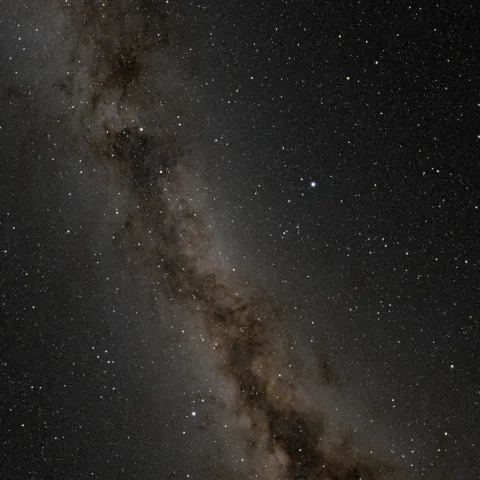
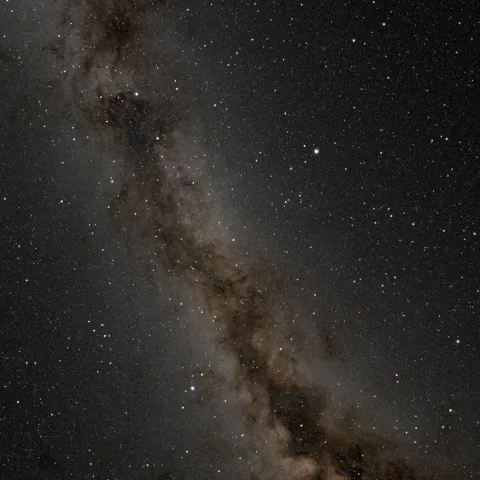
Vega and Altair stay about 34° apart (opens in a new tab), year after year, on either side of the Milky Way. Seen from Hawai'i (opens in a new tab), the observatory notes, the Tanabata stars sit in a different part of the sky than from Japan, with Altair almost overhead.
From mid-northern latitudes they are high on summer evenings; the Summer Triangle guide shows where, and NASA (opens in a new tab) notes they show even through city light.
Sources for this section Bright Star Catalogue, 5th Revised Ed. (Hoffleit & Warren 1991), as computed by this site's star engine (opens in a new tab); Seiichiro Naito, Looking up at the Tanabata stars from Hawai’i, National Astronomical Observatory of Japan (2014) (opens in a new tab); Preston Dyches, What Are Asterisms?, NASA Science (2021, updated 2024) (opens in a new tab)
Sources
Each story belongs to the people who tell it. This page reports one account from the sources below; it does not speak for everyone in a culture.
- Culture National Astronomical Observatory of Japan, Ephemeris Computation Office, Glossary on Major Stars (opens in a new tab) for Orihime and Hikoboshi · checked 2 October 2026
- Culture Seiichiro Naito, Looking up at the Tanabata stars from Hawai’i, National Astronomical Observatory of Japan (2014) (opens in a new tab) for the festival, the calendars, the observatory's event and the view from Hawai'i · checked 2 October 2026
- Culture Hong Kong Space Museum, Chinese Starlore (opens in a new tab) for the magpie bridge · checked 2 October 2026
- Astronomy Kat Troche (Astronomical Society of the Pacific), Connecting the Dots with Asterisms, NASA Night Sky Network (2024) (opens in a new tab) for the Summer Triangle and Tanabata · checked 27 September 2026
- Astronomy Preston Dyches, What Are Asterisms?, NASA Science (2021, updated 2024) (opens in a new tab) for the Triangle in city skies · checked 27 September 2026
- Astronomy Bright Star Catalogue, 5th Revised Ed. (Hoffleit & Warren 1991), as computed by this site's star engine (opens in a new tab) for the separation of Vega and Altair