Star symbolism · Symbolic interpretation
Matariki and Tanabata: their own traditions
Some of the deepest meanings people give the stars have nothing to do with the zodiac. Matariki and Tanabata are two: each belongs to its own people and is not a horoscope sign.
Matariki
For many Māori, Matariki's return marks the New Year: a time to remember, gather and plan.
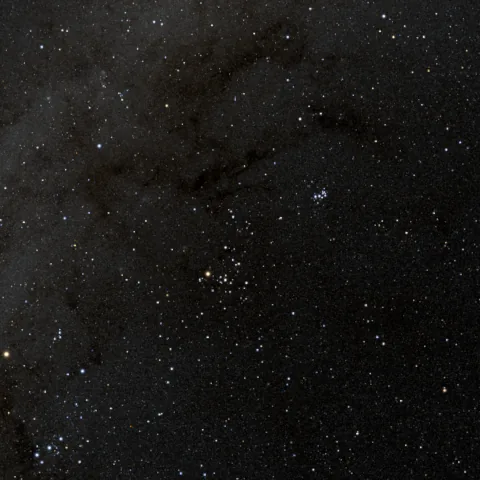
Te Papa (opens in a new tab) describes the rising of Matariki, the Pleiades, as the sign of te Mātahi o te Tau, the Māori New Year: a time to gather, to honour those who have died, to celebrate the present and to plan for the future.
Its meaning differs between iwi, and some herald the year with Puanga (opens in a new tab) instead. Historical beliefs has Te Papa's account in full.
Sources for this section Te Papa Tongarewa, What is Matariki? (opens in a new tab); Che Wilson, The difference between Puanga and Matariki, Te Papa Tongarewa (opens in a new tab)
Tanabata
In Japan, Vega and Altair are lovers, Orihime and Hikoboshi, celebrated each year.
Japan's National Astronomical Observatory (opens in a new tab) names Vega as Orihime and Altair as Hikoboshi in the Tanabata story, and describes the festival (opens in a new tab) as a celebration of the two stars' romance, held on the seventh day of the seventh month.
China's Qixi, when Altair and Vega meet (opens in a new tab), tells a related story of the Weaver and the Cowherd, and Historical beliefs has the Japanese festival's two calendars.
Sources for this section National Astronomical Observatory of Japan, Ephemeris Computation Office, Glossary on Major Stars (opens in a new tab); Seiichiro Naito, Looking up at the Tanabata stars from Hawai’i, National Astronomical Observatory of Japan (2014) (opens in a new tab); Hong Kong Space Museum, Chinese Valentine's Day, when Altair and Vega meet (Curator's Blog, 2020) (opens in a new tab)
Not zodiac signs
Neither tradition is a sign, a sun sign or a reading of character.
Matariki and Tanabata do not belong to the Western zodiac, whose twelve signs (opens in a new tab) are another system, and this site does not turn them into one: there is no “Matariki sign” or “Tanabata sign” here.
What they share is attention to the real sky: Matariki's return before dawn in midwinter (opens in a new tab), and the two bright stars of Tanabata on either side of the celestial river (opens in a new tab), the Milky Way.
Sources for this section Encyclopaedia Britannica, Zodiac (opens in a new tab); Te Papa Tongarewa, What is Matariki? (opens in a new tab); Hong Kong Space Museum, Chinese Starlore (opens in a new tab)
Sources
Practitioner sources tell you what those practitioners say. They are not evidence that the stars do it.
- Culture Te Papa Tongarewa, What is Matariki? (opens in a new tab) for Matariki and its meaning · checked 2 October 2026
- Culture Che Wilson, The difference between Puanga and Matariki, Te Papa Tongarewa (opens in a new tab) for Puanga · checked 2 October 2026
- Culture National Astronomical Observatory of Japan, Ephemeris Computation Office, Glossary on Major Stars (opens in a new tab) for Orihime and Hikoboshi · checked 2 October 2026
- Culture Seiichiro Naito, Looking up at the Tanabata stars from Hawai’i, National Astronomical Observatory of Japan (2014) (opens in a new tab) for the Tanabata festival · checked 2 October 2026
- Culture Hong Kong Space Museum, Chinese Valentine's Day, when Altair and Vega meet (Curator's Blog, 2020) (opens in a new tab) for Qixi · checked 2 October 2026
- Reference Encyclopaedia Britannica, Zodiac (opens in a new tab) for the twelve signs · checked 2 October 2026
- Culture Hong Kong Space Museum, Chinese Starlore (opens in a new tab) for the celestial river · checked 2 October 2026