Star symbolism · Symbolic interpretation
Perseus, Andromeda and Cassiopeia in myth and astrology
One family fills a stretch of the northern sky: a boastful queen, a chained daughter, a hero and a sea monster. The story is about pride and its price, and about rescue.
What the story carries
A mother's boast is paid for by her daughter, and a stranger's courage ends the debt.
Ridpath (opens in a new tab) tells it: Cassiopeia claimed her daughter was more beautiful than the sea nymphs, Poseidon sent a monster, and the innocent Andromeda was chained to a rock to pay for it. In Ovid's telling (opens in a new tab), Perseus kills the monster and marries her.
Aratus places the whole family in the sky, Andromeda with her arms stretched far apart (opens in a new tab), still in bonds, and the monster still rushing at her. Historical beliefs has the sources.
Sources for this section Ian Ridpath, Star Tales: Andromeda (opens in a new tab); Ovid, Metamorphoses 4.663–764 (Perseus and Andromeda), tr. Brookes More (1922), Theoi Classical Texts Library (opens in a new tab); Aratus, Phaenomena 634–646, tr. G. R. Mair (Loeb, 1921), Theoi Classical Texts Library (opens in a new tab)
What Ptolemy assigned
Ptolemy gave the queen's stars Saturn and Venus, the hero's Jupiter and Saturn, and Andromeda's Venus.
In Tetrabiblos I.9 (opens in a new tab), the stars of Cassiopeia have the effect of Saturn and Venus; those of Perseus, of Jupiter and Saturn; those of Andromeda, of Venus; and those of Cepheus, of Saturn and Jupiter.
To the south, the stars of Cetus (opens in a new tab), the sea monster, are likened to Saturn.
Keep in mind These are Ptolemy's analogies, reported as history, not forecasts.
Sources for this section Ptolemy, Tetrabiblos I.9, Of the Power of the Fixed Stars, tr. F. E. Robbins (Loeb, 1940), LacusCurtius (opens in a new tab)
In the sky
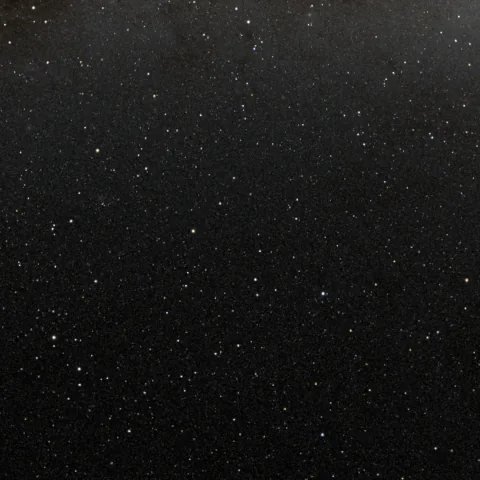
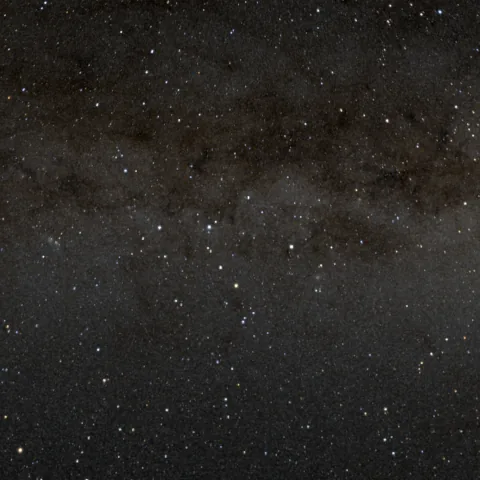
The figures are constellations; the Andromeda Galaxy only shares the princess's name.
The princess is the constellation Andromeda and her mother the W of Cassiopeia; Ridpath (opens in a new tab) notes that Cassiopeia and Cepheus, beside her, are the only husband-and-wife couple among the constellations.
The Andromeda Galaxy (opens in a new tab), 2.5 million light-years away, lies in her direction but has nothing to do with the story or with any astrological reading.
Sources for this section Ian Ridpath, Star Tales: Cassiopeia (opens in a new tab); NASA Hubble, Messier 31 (the Andromeda Galaxy) (opens in a new tab)
Sources
Practitioner sources tell you what those practitioners say. They are not evidence that the stars do it.
- History Ian Ridpath, Star Tales: Andromeda (opens in a new tab) for the boast and the story · checked 2 October 2026
- History Ovid, Metamorphoses 4.663–764 (Perseus and Andromeda), tr. Brookes More (1922), Theoi Classical Texts Library (opens in a new tab) for Ovid's telling · checked 2 October 2026
- History Aratus, Phaenomena 634–646, tr. G. R. Mair (Loeb, 1921), Theoi Classical Texts Library (opens in a new tab) for the family in the sky · checked 2 October 2026
- Practitioner Ptolemy, Tetrabiblos I.9, Of the Power of the Fixed Stars, tr. F. E. Robbins (Loeb, 1940), LacusCurtius (opens in a new tab) for Ptolemy's notes on the family and Cetus · checked 2 October 2026
- History Ian Ridpath, Star Tales: Cassiopeia (opens in a new tab) for Cassiopeia and Cepheus · checked 27 September 2026
- Astronomy NASA Hubble, Messier 31 (the Andromeda Galaxy) (opens in a new tab) for the Andromeda Galaxy · checked 2 October 2026