Historical beliefs · Greek and Roman; Ovid, Aratus and a Roman wall painting
Perseus, Andromeda and Cassiopeia
One Greek story fills a whole region of the northern sky: a boastful queen, a king, their daughter chained to a rock, the hero who rescued her and the sea monster he killed. Each has a constellation.
The story, as Ovid tells it
Andromeda is chained to a rock to pay for her mother's words, and Perseus flies to her rescue.
In Ovid's Metamorphoses (opens in a new tab), written in Rome in the early first century AD, Perseus, flying home with Medusa's head, passes over Ethiopia, the land of King Cepheus. There Ammon has decreed that the innocent Andromeda must pay for her mother's tongue, and she is chained to a rock by the sea.
Perseus, in Brookes More's 1922 translation, “as marble he would deem her” (opens in a new tab), until he sees the breeze move her hair and her tears fall. He kills the sea monster; her parents, Cepheus and Cassiope, hail him as their house's saviour, and he marries Andromeda.
Keep in mind Ian Ridpath (opens in a new tab) tells the boast itself: Cassiopeia claimed her daughter was more beautiful than the sea nymphs, the Nereids, and Poseidon sent the monster in punishment. Ovid's lines leave the boast offstage.
Sources for this section Ovid, Metamorphoses 4.663–764 (Perseus and Andromeda), tr. Brookes More (1922), Theoi Classical Texts Library (opens in a new tab); Ian Ridpath, Star Tales: Andromeda (opens in a new tab)
A Roman wall painting
A fresco from a villa near Pompeii shows two moments of the rescue on one wall.
The Metropolitan Museum of Art has a Roman fresco (opens in a new tab) from the imperial villa at Boscotrecase, near Pompeii, painted in the last decade of the first century BC. It shows two moments: Perseus flying in, winged shoes on his feet, to save Andromeda from a snaky blue-green sea monster, the ketos; and, at the upper right, Andromeda's grateful father greeting him, a hint of the marriage to come.
In the painting, the museum notes (opens in a new tab), Andromeda stands with arms outstretched, one hand apparently chained to the crag. The museum pairs it with a fresco of Polyphemus and Galatea from the same room, both on themes of love and the sea.
Sources for this section The Metropolitan Museum of Art, Wall painting: Perseus and Andromeda in landscape, from the imperial villa at Boscotrecase (20.192.16) (opens in a new tab)
The family in the sky
Aratus placed the whole family among the stars, with the monster still rushing at Andromeda.
Aratus, in the third century BC, sets “the hapless family of Iasid Cepheus” (opens in a new tab) in the sky: Cepheus behind the Little Bear, Cassiepeia beside him with her scanty stars, Andromeda below her mother with her arms stretched apart, still in bonds.
Her feet lead to her bridegroom, Perseus (opens in a new tab), and to the south the Monster of the Sea, Cetus (opens in a new tab) rushes toward her. The poem treats the figures as a way to find stars, and the story as the reason they are there.
Sources for this section Aratus, Phaenomena 634–646, tr. G. R. Mair (Loeb, 1921), Theoi Classical Texts Library (opens in a new tab)
In the sky today
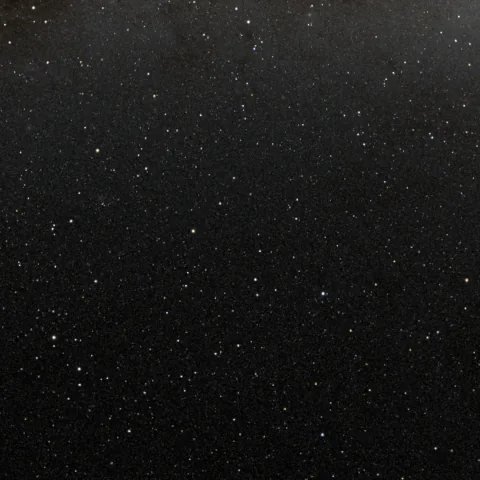
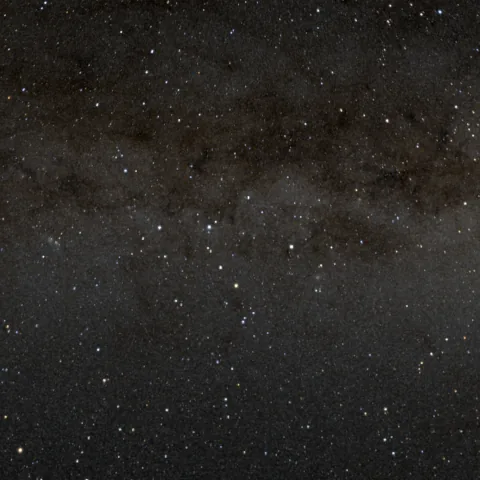
The figures are Andromeda, Cassiopeia, Cepheus, Perseus and Cetus; a galaxy shares only her name.
The princess's figure is the constellation Andromeda, her mother's the W of Cassiopeia. Ridpath (opens in a new tab) notes that Andromeda's head star, Alpheratz, was once shared with Pegasus, the winged horse.
The Andromeda Galaxy (opens in a new tab), 2.5 million light-years away, lies in her direction but has nothing to do with the story beyond its name. What lies inside a constellation explains why.
Sources for this section Ian Ridpath, Star Tales: Andromeda (opens in a new tab); NASA Hubble, Messier 31 (the Andromeda Galaxy) (opens in a new tab)
Sources
Each story belongs to the people who tell it. This page reports one account from the sources below; it does not speak for everyone in a culture.
- History Ovid, Metamorphoses 4.663–764 (Perseus and Andromeda), tr. Brookes More (1922), Theoi Classical Texts Library (opens in a new tab) for the story and the quotation · checked 2 October 2026
- History Ian Ridpath, Star Tales: Andromeda (opens in a new tab) for Cassiopeia's boast and Alpheratz · checked 2 October 2026
- History The Metropolitan Museum of Art, Wall painting: Perseus and Andromeda in landscape, from the imperial villa at Boscotrecase (20.192.16) (opens in a new tab) for the Boscotrecase wall painting · checked 2 October 2026
- History Aratus, Phaenomena 634–646, tr. G. R. Mair (Loeb, 1921), Theoi Classical Texts Library (opens in a new tab) for the family in the sky · checked 2 October 2026
- Astronomy NASA Hubble, Messier 31 (the Andromeda Galaxy) (opens in a new tab) for the Andromeda Galaxy · checked 2 October 2026